Monday, January 19, 2009

Ruminating In My Pants #5: Doing the Whole "Best Of 08" Thing on TV, Movies

So the Nerd is most certainly not immune to sharing what his favorite shit of the year was. There is something just so fucking deep within him that cries out RANK YOUR FAVORITE SHIT IN NUMERICAL ORDER! Because we all like lists like that, don't we? When you get your local paper (assuming you don't scream PRINT IS DEAD like some people...) towards the end of the year and some critic puts up his top ten movies or books or concerts - it's fun to make fun of them, pretend like you're better than them. He liked THAT movie? What a douche!

Naturally, then you go check out THAT movie because it might be pretty good...

So yeah, make fun of my choices, call me a douche or just be confused why I'm doing this so late in the fucking game (it's because I'm in a middle market and certain movies take a few weeks to get to the Twin Cities). But do you know who I fucking am? I'm the goddamn Nerd of Noir and I know what good looks like and I have an even better fucking idea what great looks like and this fucking list coming up right below this fucking sentence looks good-goddamn-fucking-great to me:

Movies! Hoo-ray!

1. In Bruges - Martin McDonagh

No movie was more surprising, more exciting, more hilarious, more sad, more violent, more...fuck it, the list goes on. In Bruges is a cult classic, a movie I shouldn't have to explain, you should just pop it in and be awed. I can't even fathom what McDonagh will do next, I just hope he does it with Farrell. Somebody's gotta keep that dude's career on track.

2. The Wrestler - Darren Aronofsky

So The Wrestler is full of cliches and lacks the scope of Aronofsky's earlier efforts, but man does this movie hit me hard. Mickey Rourke just fucking IS Randy "Ram" Robinson and if he doesn't win an Oscar I'll shit in my hat. The final minutes of this movie just fucking haunt me.

3. Rachel Getting Married - Jonathan Demme

I've had many arguments over this movie with people as of late asking me why I thought it was so great. Well, fucking look at it! Rachel Getting Married just drew me in and made me part of the family, part of the great big emotional party in a way few movies have ever tried for. Even the structure of the movie is based on a certain "partying" logic, hence why it sort of tapers off...

4. Snow Angels - David Gordon Green

I've already talked about my love of the CCAHT in an earlier Ruminating so this one should come as no surprise. It's just a simple story of domestic strife in a small-town and how simple things can escalate to terrible extremes. This movie is for sure a bummer, but it's also agonizingly intense and sometimes even pretty funny. Sam Rockwell is a genius, too.

5. Let The Right One In - Tomas Alfredson

Last year's best horror film was from Spain (The Orphanage) and this year it was from Sweden. Right One is deliberate and strange and completely original while somehow actually following all the classic vampire rules. If you don't get creeped out by this one (or laugh your ass off during the infamous cat scene), you probably eat babies (speaking of eating babies, what happened to The Road coming out this year? I was so pumped for that and now...what?)

Television! Yippee!

1. Generation Kill - David Simon

This is the most refreshing war story ever told. It's so simple yet so complex. We hang out with a bunch of AWESOMELY foul-mouthed Marines as they do a recon mission through Iraq, ultimately ending up in Bagdad in the early days of the latest Iraq war. Through this small band of people, we see exactly how hard it is to do something really good in modern warfare. This shit is just so fucking ALIVE.

2. Mad Men - Matthew Weiner

After the show settled the whole "Will Don Draper Be Found Out?!" storyline in season one, many fans were left wondering just what the fuck we'd all care about in season two. Well, like in season two of The Sopranos, Mad Men chose to just expand our knowledge of the many great characters populating its cool-ass fucking world, and good God did it ever feel right.

3. The Wire - David Simon

Before you Johnny-Come-Lately Wire fans crawl up my ass about not putting this as number one, let me establish my impeccable Nerd cred by saying I was in the story from the beginning so don't you NPR folks who came on-board just because you heard season four was talking about "the children" (oh! What will happen to the children!?) get up my ass about this ranking. Season Five tried too hard and enlightened too little in its chosen subjects (print newspapers) and for that it ends up below these two. But still, there was plenty of greatness to be found, just not GREATNESS as with all the seasons before it.

4. Elvis Mitchell: Under The Influence - Elvis Mitchell

Though I also loved Elvis Costello's Spectacle show on the Sundance Channel, Elvis Mitchell's TCM interview program just felt more intimate, more real. Plus, he had better guests. Joan Allen, Tarantino, Sydney Pollack (right before he died!), Bill Murray - all of them talking about the movies that inspired them and shaped their career paths. Yeah, this show is for the nerdiest of nerds, but it also beefed up the Netflix queue (as if it needed any help).

5. The Paper

There was actually a reason to watch MTV in 2008! Shit, there was actually a reality-TV show that I kinda loved. That's a fucking miracle right there! The cuddly kids of Cypress Bay High in Weston Florida won this crotchety nerd's heart as they tried to put together something as earth-shattering as gasp! a school newspaper. There is really no accounting for why I loved this white-bread little show so damned much. Do I have what you humans call...feelings?

Jesus, this list-making is making me thirsty. I'm gonna hit you back later with book and music lists real soon. The Nerd's vacation is officially over!

Monday, January 5, 2009

BORDERLANDS by Brian McGilloway

Alright, so before you say jack-fucking-shit, up-in-my-fucking-grill reader, lemme just say this: Yeah, I fucking well realize that McGilloway's debut novel Borderlands doesn't fit the site all that well. Good it sure as fuck is, but hard-boiled/noir it sure as fuck ain't.

The hero is flawed but all in all a good guy, the language is usually pretty tame, there's some sex but nothing too graphic and, until the climax, the violence is primarily off-screen, as they say. And yeah, it's sorta your traditonal police procedural mystery where the detective pulls back the layers and peels at the paint until - oh my god! - this shit goes all the way to the big boys in power!

But you know what? It's good. So fuck you, purist readers. Good cuts the mustard fucking well enough this time out for the Nerd of Noir. Besides, it's about time I reviewed something my mom might enjoy (though thinking about it, she's a big Koryta and Lehane fan so I guess I've already covered that base).

Borderlands is set in the last days of 2002 in a small town near the border between Ireland and Northern Ireland (hence the title, how about that shit?). A teenage girl's nekkid body is found, the cause of death not apparent. The murder case, a rare thing for the local PD, falls on the shoulders of Inspector Ben Devlin, a family man who - like any decent small town cop - seems to know everybody in his normally happy little hamlet. But he's barely into the investigation before another young person is killed. If you don't think the two cases are related, you are easily fooled, retarded reader.

I pose a question: What is society's fascination with murdered or missing women?

Nah, I'm just fucking with you. If the Nerd wanted your opinions he wouldn't have formed his own - no doubt completely correct - opinions already.

Okay, so the mystery plot is solid and sound, everything connecting and complicating and involving like the best mysteries do. This bitch is complex and it moves. If that's your bag, you won't get pissed when you wrap this one up.

But, not that the Nerd traffics in cliches or nothin', but a series is only as good as its main character and Ben Devlin is pretty damn good. He's just a decent guy - yeah, he wants to fuck this rich bitch something awful but, you know, he doesn't so he's a decent guy. Loves his family, doesn't get drunk, gets boners but doesn't ruin his life over them, is honest with his wife most of the time. An average decent guy who is good at his job but not some kind of superman or "the dogged detective who will stop at nothing to pursue justice." He's just a decent guy with a job to do. Basically, he's a good man to have as your narrator, to have as the anchor of a new series.

Then there's the setting, which is also damn fine. McGilloway's depiction of small town Ireland feels real, lived-in, sharp. This is not a bunch of leprechauns dancing a spirited jig in the cobblestone streets nor is it nothing but dark alleyways and smoky pubs. This is small town life in the then just emerging New Ireland, a sometimes awkward mix of the traditional and the startlingly new. Also, there are travellers (gypsies or tinkers to my racist readers, roma or sinti to my p.c. readers) in the novel and I never get enough of that culture clash shit.

So yeah, if you like mysteries, McGilloway's Borderlands is the start of what will no doubt be a really good long-running series. He can unravel a mystery plot with the best of them, his Ben Devlin is a wonderfully real guy, and he's got a great sense of place.

You bet your ass I'll read the next Devlin.

See? Even the Nerd of Noir can't turn down a good mystery - even one such as this that doesn't involve the detective shooting an unarmed bad guy in the face or anything awesome like that - when it's done exceptionally well.

Friday, January 2, 2009

Friday's Forgotten Books: BIG TOWN by Doug J. Swanson

Doug J. Swanson was a hero to me when I was a teenager. I can remember reading his debut, Big Town, on a camping trip when I was twelve. It was one of those books that just woke me up, showed me how down and dirty the crime genre could be.

I'd say that Big Town played a major role in making me a crime fiction fan for life. No shit, dear readers. None whatsofuckingever.

Big Town is the first in Swanson's shamefully under-appreciated Jack Flippo novels, a private eye series set in Dallas, Texas (in case you thought I meant the other Dallas...). Flippo used to work in the DA's office until his dick got him into some trouble (and I don't mean like his dick didn't use the proper format on a memo, I mean like his dick had sex with the wrong woman), costing him his job. Now he's one step ahead of the repo man and collection agencies, living in a shit shack that no bum would envy, and he still hasn't learned to think with the other head.

Jack is hard up for money (in case that last sentence wasn't clear...) so he takes a quick job from a scummy lawyer friend snapping photos of the famous huckster/entrepeneur Buddy George cheating on his wife. Bad shit goes down during the shoot and Jack ends up saving the mistress from George's violent idea of sex.

Then he finds out that George's "wife" is actually his opportunistic secretary, Paula (who happens to be smoking hot) and that someone paid the mistress to seduce Buddy George. Obviously, things are not what they seem and soon Jack is in the thick of a twisted blackmail plot that is - no joke - fucking brimming with double crosses, hot sex and some memorably nasty violence.

What first strikes you about Big Town is that while it seems to be a P.I. novel, it quickly becomes clear that it is more of a crime novel than a mystery. There aren't any major revelations or anything, we're kept abreast of shit along the way like an Elmore Leonard novel. We get to follow all the major players in this one and thank God, because Jack has some great fucking characters surrounding him - Teddy Deuce chief amongst them.

Teddy is the henchman in this book, the idiot muscle counted upon to deliver the beat downs and intimidate the competition. Thing is, dude's about as loyal as your dog when a stranger offers him a piece of hamburger. Teddy double-crosses people so often that his dumb ass can't keep straight who he's working for eventually.

Then there's Buddy George, the Napoleonic motivational speaker. And the sexy femme fatale Paula. And the mistress Sharronda. And Sharronda's white trash piece of shit boyfriend Delbert - a brief (guess what happens) but MAJOR highlight.

But of course, a series is only as strong as its hero and Jack is one of the all-timers. He is as smart as they come and says all the cool lines but, goddamnit, dude just can't see a foot in front of him if his dick is at attention. In other words, he's willing to over-look certain things about Paula, a woman he can't even remotely trust but man is she purty, a situation that leads to him becoming one of the more dark and fascinating series heroes I've ever encountered.

Swanson hit the fucker out the park his first time around and his following novels were no slouches either. Dreamboat, the second book, has this mistaken identity thing near the end involving tattoos that is just the nastiest, most perverse, excellent scene ever. I mean it just...shit. I guess this FFB entry is really just a plug for Swanson's body of work. The guy was just so damned good and it's coming up on a decade since we've heard anything from him. That is a shame and a fucking half.

I think Swanson's brand of sick, funny and dark would fit right in with the big boys of neo-noir that are pumping out the awesome today. He had his own thing going with Jack Flippo - a PI series that was more Cain than Chandler - and Big Town showed he had it down cold right out the fucking gate.

Sunday, December 28, 2008

RUMINATING IN MY PANTS #4: The Nerd Goes All Dave Barry On Your Asses

Since all kinds of good shit comes out at Christmas, I've been Johnny-Theater-Go even more than usual as of late (I usually go to the movies once a week at minimum). I just had a bad theater experience yesterday at a matinee of Doubt so this little story here amused me probably more than it should have.

If you're the type that says "fuck links," I'll describe the story in brief. A dude shot another dude in Philly for talking during Benjamin Button. SHOT HIM RIGHT IN THE MIDDLE OF THE MOVIE! Now, don't worry, my sensitive readers: the talker lived.

The real question is: Did he learn his lesson?

Now the irony is obviously that, by shooting the talker, the serious movie-goer caused an arguably greater disruption to the other patrons than the original movie talker. But still, every theater should put this story up in the lobby on a large poster. This would not be a threat that, you know, talk in the movie and your ass will be shot. No, it would be more of a word of warning that shit can go down when you gab through the fucking film.

Now, my old man has a theory about silencing talkers and it is based on this little anecdote from years ago:

We were going to a movie and a couple near us was talking during the opening credits, hell not even, it was like the fucking studio logo had just gone up on the screen and this couple was talking. Not that big of an offense, right? Not yet, anyhow.

Well, this old dude sitting in front of them fucking STOOD UP and turned around and said, "NOW. YOU TWO AREN'T GOING TO TALK THROUGH THE WHOLE DAMN MOVIE, ARE YOU?!" in this loud fucking voice, so everyone could hear.

Well, that did it. I didn't hear a peep out of anyone for the whole movie.

So basically Pops' theory is this: Establish before the movie begins that you are indeed the craziest motherfucker in the whole fucking theater and then, you know, nobody will test you.

That obviously requires that you have no self-awareness whatsoever but, really, what are the odds that somebody in the room knows you? Pretty slim, unless it's the only movie theater in town, I suppose.

But as someone who has politely "shushed" people before, I can tell you that that doesn't cut it. The offender just thinks you're a bitch, someone who should mind their own damn business. And you could go get the theater manager and they will usually gladly usher that talking motherfucker out of the theater, but then you're going to miss some of the movie and disrupt everyone's experience even more with the (admittedly satisfying) scene. So basically we need an army of citizen crazies out there to keep the peace and quiet in our nation's theaters.

Step up, imaginary public. Step the fuck up and dare your fellow patrons to breathe one fucking word during Bedtime Stories (okay, so if you go to a kid's movie you have to expect that little kids are going to chat through the movie, but still, I wish I could have seen Bolt in peace. That was a good movie.).

It should be said that by-and-large I am a devoted matinee man, so the audiences I get are generally pretty good - fellow devoted nerds and serious movie-goers like myself. But another thing you have to expect during matinees is the goddamn elderly.

I don't know how so many of the self-proclaimed "greatest generation" have managed to skate through life with shitty manners, but Jesus Christ. I've learned to avoid sitting near any couple or group over sixty-five, but you know, their hearing is often poor and therefore their talking is especially fucking loud. And it's always roughly the same phrases I hear every incident:

"What's going on? What did that mean? Who's he?"

I honestly feel that theaters should hand out a pamphlet to every customer with their ticket stub that explains the following rules of all movies:

"If you are at any point confused about the plot, take notice that if you have been even marginally attentive during the film, you are indeed not missing anything. Chances are that everyone in the theater is just as confused as you are. But do not fret because we have a secret for you, retarded theater-goer, and it is this: the twist will be explained to you within the next few minutes. This is how all movies work. Most people figure this out after the first few hundred movies they view, but you are apparently not very up-on-the-quick-take."

Just a simple little pamphlet would do, with large lettering for the poor of sight. I guarantee it would cut down on talking levels by forty-eight percent within the first month alone.

But to get back to The Travis Bickle of Theater-Goers: Learn from his mistakes. His heart was in the right place (and his head was in fucking Crazy-Town, U.S.A.) but his execution (poor word choice) was off:

Despite what badasses in the movies say ("Don't pull that thing out unless you intend to use it."), sometimes all you need to do is show them the gun. Just be sure to do it before the movie starts.

Saturday, December 27, 2008

Craig McDonald's Toros & Torsos

About a year ago, it seemed anybody with even the slightest interest in crime fiction was talking my ear off about Head Games, the debut novel from Craig McDonald. When it finally reached the top of my TBR pile, I quickly realized why. Head Games was fast, funny, original, violent, well-researched, and a fucking hoot to boot.

A few months back marked the arrival of McDonald's Toros & Torsos, the prequel to Head Games, and I barely heard shit about it. The fuck is up with that, reading public? How'd you drop the fucking ball so quickly, how fickle can you faceless masses be? Because, no goddamn joke, T&T is even better than Head Games, a feat that I didn't think possible until, you know, I read it.

So if you're not familiar with Head Games you have to do two things for me:

1) Pull your head out of your ass.

2) Read the shit out of that motherfucker toot-fucking-sweet.

We last saw Hector Lassiter, the crime novelist protagonist of Head Games, shooting the minions of Prescott Bush to keep Pancho Villa's head out of the hands of a bunch of Yale alumnis. In Toros & Torsos Hector is a much younger man of thirty-five, hanging out in Key West with Hemmingway, sipping Mojitos and seducing women. This simple life of writing, drinking and fucking is rocked by the arrival of the stunning Rachel Harper, a huge fucking hurricane, and a bunch of butchered bodies that resemble certain works of surrealist art....

From there story spans over a quarter of a decade and along the way we meet tons of famous figures - the names of which I will not reveal because, well, it's a major part of the fun of the book. I will say that we do get to hang with Orson Welles once more, only younger, thinner, and apparently involved in one of the most famous murders of all time (it's a fucking brilliant plot twist).

T&T definitely does the alternative history thing a la James Ellroy, same as Head Games, and the book is just as much fun as it predecessor, but in different ways. Head Games was sort of like if McCarthy's No Country For Old Men had a sense of humor and a bunch of fun noir pop culture mixed into the plot. Toros & Torsos takes its time compared to Head Games, but it is a better novel for it. Also, there is not nearly as many bloody action sequences either. And it's more of a mystery/serial killer thing than a crime novel.

Yeah, I know. You're wondering, "Well, Nerd, if it's a mystery, a (sigh) serial killer thing, not as violent, and has a more deliberate plot, just why the fuck are you telling me that this a better novel than Head Games?" Fair question, imaginary, highly-incisive reader.

Fair question indeed, old friend.

The answer is actually a disgusting cliche that the Nerd fucking hates more than Dane Cook:

"Toros & Torsos is a novel one savors."

I fucking know, right? That word "savor" just makes you want to stab someone (well, I admittedly have a problem with nearly every word that is involved with food, but that might just be me). Anyhow, it's true. This book was just like getting a chance to spend time with a bunch of awesome historical characters from the literary, art and (especially exciting for The Nerd) cinematic worlds of the past.

McDonald has clearly researched a shit ton and it pays off - there is never a moment where you say "Hem wouldn't say that" or "Orson wouldn't do a thing like that." Though they may not have actually done and said the things they do and say in Toros & Torsos (at least let's hope not, anyway), you don't ever doubt that they could have.

But not only is there an all-out fucking buffet of cool characters for any geek to shit their pants over, but there's this fucking genius mystery plot holding it all together, this just brilliant, un-forced way to allow the reader the opportunity to be in all these awesome places in these amazing times with these iconic characters - it's a pretty fucking astounding feat, really.

And it's not like we're not in Forrest Gump-land either where we just drift along until someone else cool runs into Gump. No, there's this fucking tightly constructed, bloody thriller plot holding it all together. And then the horrible, shocking, satisfying, disgusting choices that Lassiter eventually has to make at the end? It's just so quietly brilliant, so fucking subtly bold an ending. But it's all just the fucking icing, man.

So yeah. Toros & Torsos is ridiculously awesome and I have my fingers and fucking toes crossed that McDonald will do at least one more Lassiter book because I'm not done hanging out in his beautiful, dark, violent world.

Saturday, December 20, 2008

Ken Bruen's ONCE WERE COPS (The Nerd Rage Edition)

I've posted many a rave review about Ken Bruen on the site and I'm sure some of my devoted readers (there has to be a couple of you out there) were wondering just when the Nerd would get off his ass and review Once Were Cops, the latest book sure to win "the Ryan Adams of the crime fiction world" yet even more fans. Well, I'll tell you what was up with the delay, dear readers, I'll tell you toot-fucking-sweet:

I waited for it to arrive at my local library.

Now you're saying to yourself: Nerd, what the fuck? Why don't you support Bruen monetarily? You dig his books and want him to keep on trucking so why don't you cough up the fucking bucks already?

Well, my answer is this: Have you looked at the hardcover of Once Were Cops? It is the biggest waste of trees I have ever seen - and I was a creative writing major (I may have just lost some peer editors with that one...)! His epigrams that appear before every new chapter apparently have to appear on the right-hand page and same goes for the beginning of the fresh chapter. Therefore, if a chapter ends on page forty-one you have a blank forty-two, an epigram on forty-three, another blank forty-four, then finally the new chapter on forty-five. That is three wasted pages, seeing how the epigram could just have gone on the new chapter page! What the fuck!?

And then there's the actual layout of pages themselves. There is a space between every paragraph - and loyal readers know that Bruen RARELY does paragraphs anymore so in other words there's a space between every fucking sentence! American readers have become used to this from St. Martin's hardcovers of his Taylor novels, but never to this ridiculous extreme. It has gone too far, I say! Too bloody fucking farrrr!!!

Okay, I have collected myself. Deep breath.

Let me offer an alternative, good people at St. Martin's: Why not do mass market (the horror!) versions with tricked out covers and designs for Bruen's books for awhile. I mean, the dude seems to shit awesome novels and now has a pretty sizeable base of readers - so why not? If you use some creative juice, it could be a whole new thing in publishing.

And I'm not saying you should totally rip off Hard Case either.

Nobody does mass markets that look sharp and wrap around the spine the way they do with hardcovers and trade paperbacks anymore - so start the trend. Enough with this 22.95-for-a-"three-hundred"-page-book-when-we-all-fucking-know-it's-more-like-a-one-fifty-page-novella-at-best bullshit. The economy's a little tight, and therefore the book budget is tight too. Keep this up and we're gonna look elsewhere.

And don't give me the "quality over quantity" bullshit. It doesn't float here. I have to pay the same price for a Carol Higgins Clark for dear old gram as I do for a Ken Bruen therefore there is no fucking quality over quantity argument. It's about the product, the weight, the dimensions, the materials, the shipping, etc. Don't fuck with me, youse.

Ooookaaayyy.

On to the actual review! Waddaya say?

Once Were Cops is some solid shit, a nice break from the steadily increasing bleakness of the Taylor novels and the steadily increasing ridiculousness of the Brant novels. We follow young Shea as he makes his way from being Galway Guard (after a brief chat with Jack Taylor, establishing that the novels are in the same world, for those who don't remember) to the NYPD thanks to some dirt he has on a corrupt Galwegian politician. There he is partnered up with Kebar, a dirty Polack cop with one of them attitude problems.

Turns out both these fellas have some nasty secrets.

Shea's is that he is a serial killer whose MO is strangling pretty women with swan-like necks with green rosary beads. Kebar's is that he has a beautiful sister with a swan-like neck and a mind like a five-year-0ld living in a fancy nursing home, an expense that Kebar pays for with his mob money. Wouldn't you know it? These two secrets collide!

It's sick, dark stuff that reads hyper-fast and, thanks to Bruen's knack with rules-be-damned-post-modern-surprises, is...surprising. It will no doubt win him some new fans and please old ones, but it isn't the opus I've been reading about as I waited for the library to buy the damned book already. No, that title still belongs to American Skin, the greatest use of Bruen's gifts thus far.

However, it should be said that there were a few quibbles I had with some of Bruen's "Americanese," some dialogue in particular that didn't ring true (a certain character saying "tarnation" made me wince), and the timeline gets murky in the middle of the novel (Shea's romance with Nora progresses really quickly and how long is Kebar off on a bender?)...

But that said, this is probably the most satisfying of his novels since American Skin so yeah, it's pretty solid stuff, almost worth the trees needlessly wasted in its printing (wow, that reads harsh if you just skipped to the bottom for a recap).

Thursday, December 18, 2008

Catching Up #17: QUEENPIN by Megan Abbott

The crazy thing about Megan Abbott's Edgar Award-winning Queenpin is that it reads like it could have actually been written fifty years ago. Take out a couple F-words and this baby could have been written back in the good old days of crime pulp, no sweat. But the crazier thing is this: Despite its prose style and lack of swears (I'm five years old), it doesn't feel neutered or cozy in the least. In fact, this book hits hard and it hits low and it hits fucking often. It's a doozy-and-a-fucking-half.

The plot is simple in the way the best noirs always are (as in it isn't really simple at all, but it seems simple enough initially). We follow a young woman as she is taken under the wing of a legendary (and legendarily violent) moll named Gloria Denton. She used to hang with Luciano and the rest back in the early Vegas days, has a big-time rep.

Anyhow, Denton takes this young woman - our unnamed narrator - in and shows her the ropes of collections and numbers running, shows her how to be tough and professional in a man's world. She gets her some nice clothes and sweet digs and turns her into a younger, prettier version of herself. Thing is, our young heroine can't keep her legs closed, despite her mentor's persistent warnings. So when she falls for a low-life gambler named Vic who's in deep to a local boss, she decides to do the unthinkable - cross the volatile Gloria to save her boyfriend's ass.

Abbott is obviously a student of old pulp and classic film noir as Queenpin is drenched in hipster lingo from a by-gone era and brimming with the sass of every great femme fatale ever projected on a silver screen (see, I can write the purple shit when I have to). But as with the best in the noir tradition, her stylistic choices only serve to enhance the storytelling, not bog down the pace. This mother is as tight and sleek as a Boetticher western (the fuck did that reference come from?).

Queenpin is unlike anything I've read in quite sometime. It is simultaneously an exciting original in the genre and a reverential homage (GENRE and HOMAGE in the same sentence? Double your French douche-ery!). It is both a restrained exercise and completely unbridled darkness. Why Abbott wasn't interviewed by Terry Gross or Michael Silverblatt or some other yuppie culture icon after this book came out is beyond me. This is the cross-over book of the decade - something for both the NPR set and the hard-core-lone-gunmen-noir-crazies of the world.

In other words, you should read the shit out of it, dear reader. Read the shit out of it but good.

Friday, December 12, 2008

Catching Up #16: MIAMI PURITY by VICKI HENDRICKS

Vicki Hendricks, where have you been all my life? I just finished Ms. Hendricks' debut from the mid-nineties Miami Purity and sweet Jesus was it up my alley. I plowed through this fucker in toot-sweet and wanted more when it ended.

Hendricks doesn't hold back on anything - sex (especially sex), violence, creepy/disturbing/disgusting stuff - she takes it all the way, pushes the reader's tolerance past the normal limit until you're just shaking your head at the depravity of it all. In other words, I dug it something fierce.

We follow Sherri, a bartender/stripper in her mid-thirties looking for a change in sunny Miami. She's spent her life thus far working sleazy jobs and fucking sleazy men and thinks she has found salvation when she comes across a Help Wanted sign at the Miami Purity laundry - a Help Wanted sign and handsome manager with a gigantic cock named Payne Mahoney.

Payne seems innocent and sweet and totally fuckable, but is lorded over by the owner of Miami Purity Brenda Mahoney, his mother. Sherri becomes obsessed with Payne, envisioning him as the opposite of everything she's ever been apart of - good Catholic, a mama's boy, beautiful, tidy, etc. Now if only his drunken bitch mom weren't around...

The story basically plays like The Postman Always Rings Twice only with the roles reversed and the narrator is a white trash. And it's packed with graphic sex. And graphic violence. And is totally disgusting. For those out there not familiar with James M. Cain, think of Miami Purity as a blue collar Jason Starr novel. For those of you not familiar with Jason Starr, how the hell did you end up on this site?

So yeah, sort of a short one this time out but I honestly don't have anything more to say about the boy, primarily because I'll run the risk of ruining some nasty surprises. The Nerd of Noir just doesn't want to be that guy.

Monday, December 8, 2008

Ruminating In My Pants #3: The Crime-Centered Art-House-Thriller/Crime-Centered-Literary-Thriller

When perusing the newspaper for movie listings (oh print, you silly antiquated thing, you) for movie times, rare is the instance when you find a noir/crime film to attend. Hell, for that matter you barely even find action movies or straight-up thrillers (and aside from last year's Fracture you almost never see a courtroom thriller anymore - remember when those were HUGE, kids?). But there is one thing you almost always find - and they are usually pretty fucking awesome - and that is what I call the Crime-Centered-Art-House-Thriller or CCAHT.

These are much like the Crime-Centered-Literary-Thrillers you find in the New York Times Book Review every week, only in movie form (wow, that is some redudant shit right there. I apparently think that you, dear reader, are an idiot). Patron authors of these are such critical darlings as Russell Banks, Pete Dexter, Richard Price, James Carlos Blake, James Ellroy, Cormac McCarthy,and now noir fan fave Dennis Lehane has recently joined the ranks.

These authors write dark, masculine, violent stories that would make any crime fan get a boner, but they manage not to be lumped in with the critically poo-poo-ed "genre writers" simply because they often center their stories around historical events. Basically, you take a crime novel and sprinkle a J. Edgar Hoover here, a dash of Jesse James there, package it in a classy cover and voila! you have a crime novel fit for yuppie consumption.

I'm a big fan of that stuff too and when I'm not reading stuff for the blog, I've generally got my acne-scarred nose in one of their many books because non-fiction frightens me unless it is about filmmaking (Ebert's new book on Scorsese is awesome, but could use some stills or production photos at the very least, by the way.). But the film equivalent of this literature phenomenon works a bit differently, it seems.

Films that I would qualify as part of the CCAHT genre from recent years would be ones such as Shotgun Stories, No Country For Old Men, Before The Devil Knows You're Dead, 4 Months 3 Weeks and 2 Days, The King, Zodiac, In Bruges, Mystic River, Gone Baby Gone, In The Bedroom, Snow Angels, Transsiberian, and Eastern Promises.

Most of these films feature big stars and have heavy talent behind the camera, and a large number of them are also adapted from CCLTs as well, but they often find themselves strictly screened at your local Landmark Theatre (and unless you live in a major metropolitan area, you're SO-fucking-L until it's available on Netflix). CCAHTs also pop up frequently at the Academy Awards and on the major critics' top ten lists, much like the CCLTs often garner similar awards and critical notices in the book world.

Unlike the CCLTs, CCAHTs don't have to always be historical to be considered part of the pack. Mainly, they have to not just be violent, but explore the nature of violence and blah-blah-bullshit-blah. This is where I roll my eyes until the retinas detach. With both CCLTs and CCAHTs there seems to be this idea that they have higher-minded goals than crime/noir fiction. While this is sometimes true, it is more often not the case.

Can you honestly claim that a Pelecanos novel explores violence any less probingly than The Darling by Russell Banks? Or that Before The Devil Knows You're Dead has more grandeur and tragedy than the goings-on of The Grifters? The answer is no, in case you're wondering.

You can even do the flipside with this argument too. Is the violence any less exciting and lurid in Dexter's Train than it is in Swierczynski's Severance Package? Is No Country For Old Men not as visceral and gory as the Coens's earlier effort, Blood Simple? For answer, see above paragraph.

We do need labels to some extent because, well, shit needs to be marketed. That is obviously what labels and genres and markets and demographics all come down to: reaching the appropriate audience. But I don't see the point of giving these labels and genres "worth," making one or the other greater than/less than. After all, as far as movies go, unless you see the movies mentioned above which are packaged ever so high-mindedly, you're not really catching any decent crime shit at all. Those are practically all there is for crime nerds anymore!

But for books, I'd lat least ike to see more endcaps at Barnes & Noble where some of the CCLT writers are lumped in with folks like Pelecanos, Guthrie, Bruen, and Huston. Somebody's gotta bridge the gap, and since publisher's aren't about to do it, it's apparently up to booksellers and library employees. Well, those folks and certain brilliant bloggers with too much time on their hands.

Thursday, December 4, 2008

Ruminating In My Pants #2: The Teen/Tween Reader

With the enormous success of the lameness that is Twilight comes much master-debating by bloggers across the nerd fiefdom that is the inter-web. Harry Potter and Twilight have managed to capture the imaginations of many a budding reader, and no matter what my objections to either series, you have to say that this is a good thing. The shit of it is, though, that the success of said crapsterpieces hasn't inspired said budding readers to venture out much beyond those two authors.

Now I might not be the best person to solve this issue but that doesn't mean I ain't got no opinion (The Nerd always has an opinion, and it is always the right one). When I was a boy, I wasn't much for young adult fiction. I figured that if I was going to invest my time in a three hundred page book, it may as well have been written by someone who wasn't pandering to my age group with childish morals and unadventurous storytelling. So instead of reading Johnny Tremaine and the R.L. Stine canon, I read Stephen King and Lawrence Block. They were easy to read and their profanity, sex and violence was just what I needed to feel slightly edgy, slightly badass in my fiction choices.

Now, I know what you're saying, dear reader. Your monocle has shattered and you are raising your index finger in admonishment, declaring, "My dear Nerd, what of the morals of the young children? Will not their young minds be thoroughly warped?" To this I say only this: Yes. Of course they will be. And that is a good thing.

Do you fucking know what Twilight is? It is about abstinence vampires. It is a primer for girls to eventually read romance novels. Twilight is fucking sexless romance and testicle-less vampires. If there is a greater literary crime I have yet to hear of it.

If it takes some titillation to get kids to read so fucking be it. Do you want them not to pick up a novel until the next Da Vinci Code comes around? No, no you do fucking not. I would rather they read about blood and guts than they read some toothless bullshit and figure that's what all reading is like so why should they bother reading at all?

When you're a kid you want a little bit of danger, you want to push the limits a bit. What better arena than books? It's good for you, it's cheap entertainment, and the initial love of some good old fashioned trash might later lead them to be more adventurous and then finally tackle the hoidy-toidy canonical works.

If I were a middle school English teacher and wanted to get a twelve year old boy excited (if the sentence ended right here I'd be a bit of a paedo) to read I would toss him a copy of The Road. It is short, it is violent, it's an adventure, and it's a minor challenge. I really think that it should be the new middle school book instead of Lord of the Flies, though that one is still extremely solid.

Now, I cannot write off all teen fiction (though I'd like to). I remember feeling that sense of danger, that sense of getting away with something from the author Christopher Pike when I was a kid. A few of his books were pretty much straight-up noirs that felt exciting and edgy, like glorious dark pulpy trash. Gimme a Kiss, Die Softly, The Wicked Heart - that shit was a rush when I was a kid.

Let young readers feel like they are getting away with something. Remember how everybody knew what page Anne Frank talked about "touching bosoms" in her diary? Or how shocked you were to find a discussion of "beating off" in The Chocolate War? It's that sense of "adultness" that I think inspires certain kinds of readers. You'll always have your boys who like sci-fi/fantasy shit and you'll always have lame-shit series that girls will eat up like fucking candy, but for everyone else you need to foster that sense of danger, that sense that you have to read under the covers with your flashlight so your parents won't catch you reading such filth. That stuff warps minds. It develops nerds. It sprouts lifelong readers.

It worked for The Nerd of Noir.

Wednesday, December 3, 2008

Catching Up #15: RILKE ON BLACK by KEN BRUEN

My pimping of Serpent's Tail books continues with Rilke on Black, Ken Bruen's debut novel. Before I get into it, dig that awesomely homoerotic cover. I wish the copy I'd picked up had that cover so that people would think I was reading some sort of strange gay erotica (clearly of the rape fantasy kind). I mean, I'd already been harassed by people in coffee shops thinking I was a homophobe for reading a book called Fags and Lager so why not even everything out by looking like I was totally gay? Serpent's Tail certainly goes out of its way to make things socially awkward for the self-conscious American male reader, you've got to give them that.
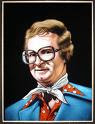
The story of a kidnapping gone awry (is there any other kind of kidnapping?), Rilke on Black is classic Bruen. It is obsessed with high and low pop culture, filled with sharp dialogue, spare in its prose and dark, dark, dark. But there are some things that definitely set it apart from what was to come later.

What fascinated me the most was how Bruen's use of pop culture quotes - lines from poems, songs, novels and films - actually had a reason for being in the book for once. I mean, I'm not against Captain Epigram's insistence on half of his short-ass books being quotes from other works, but I always just thought that he was doing early period Pelecanos on crack or some sort of hyper-Tarantino impression (check out what I like!) in his writing. In Rilke on Black Bruen's references actually mean something.

It's a bit of a revelation, honestly.

In my view, Bruen's debut is, like all British novels, about class, specifically through taste. It's the ultimate hipster crime novel in a way (as if any of his others aren't). You have the three kidnappers who all represent different kinds of culture. Our hero, Nick the bouncer, is trying to make himself seem somewhat posh by reading tome after tome of low-brow bullshit via a little thing called Reader's Digest (you've seen it at your grandma's and yes, you have read the Humor in Uniform joke section at least once, admit it). Then you have Dex, the psychopathic hard man, who is like the ultimate hipster with his vast knowledge of movies and TV shows and other middle class staples (he's your Rob Gordon, if you will).

Then there is Lisa, the femme fatale who likes to quote poetry and other hoidy-toidy stuff, your genuine posh item - though she is later revealed as a total phony, only classing it up to show off to her object of desire/kidnappee Ronald Baldwin. Ronald is the real deal in posh, he may be black and an apparent hard man of sorts, he can quote all the classics and annoy the shit out of you like the best of those professors you wanted to stab with you no. 2 in English 101.

So in other words, Bruen tosses off quotes and references galore per the norm, but all the while I felt like they weren't just Bruen doing an unsubtle Oprah's Favorite Things list in the story. It felt like he was actually trying to say something with his pop culture madness, bring up a point about class and, ultimately, about the crime novel itself. This book feels like Bruen's thesis about the neverending pulp vs. literature argument, the ultimate point being there sure as shit is room enough for both.

Okay, so The Nerd got off on a bit of a tangent and got all literary on you (I'll speak in the third person if I want to, fuck you) but this book is pretty great. Hell, it might actually be the funniest of Bruen's novels which is saying something, considering how hilarious the Brant novels. Also, Brant shows up in the book as a detective, but I get the feeling that it isn't BRANT himself. If it is supposed to be, he certainly doesn't really fit with the official series stuff. If anything, it proves that . . . Bruen enjoys the name Brant, I guess.

Also, the language isn't quite as pared down as it eventually becomes in his later books. It's still fucking lean, but Elmore Leonard lean, not James Ellroy lean.

So, conclusion time:

Read this book. It is good. I went on a tangent about high brow shit above because I like to show off my learned-ness. The end.

Wednesday, November 26, 2008

Catching Up #14: NINETEEN SEVENTY SEVEN by DAVID PEACE

So I just blasted my way through David Peace's second offering in the Yorkshire Quartet, Nineteen Seventy Seven, and it has flooded my brain with some interesting questions about what makes a noir successful.

If you've been following this blog like an obsessive nerd (somebody out there is, I hope), then you have probably noticed that my personal favorite crime novels are ones that are both ambitious within the parameters of the genre while also meeting the essential requirements of hardcore violence, sex, suspense, and the like. This novel certainly is of that sort. It transcends (hateful choice of words, I know) its genre with its stylish prose and attention to historical detail, its sheer poetic-ness (how delightfully unpoetically put, Nerd), while giving you badass main characters, lots of shocking violence (REALLY SHOCKING) and even more shocking sex (most of which is of the rape-y variety).

But how far is too far when it comes to such ambitions? What is the point at which there is too much of the literary ambition and not enough of the satisfying pulp? This book, I think, takes the "high art" elements just a bit too far.

(Another example where this happened for me was with Dead I Well May Be by Adrian McKinty. He's got a great story and a great setting in there but he over-writes and over-writes until I had to start skimming. So much description and he had such an obvious love of his own clever voice that I could barely take it. If I were the editor I would have cut about a third of that shit out. Yes, I realize this is an unpopular opinion.)

The story follows two bad dudes looking for the Yorkshire Ripper, a killer (possibly killers) chopping up whores in disgusting ways. Jack Whitehead is a reporter for the Yorkshire Post who is mourning the mysterious death of his last girlfriend and generally coasting through his job drinking and fucking whores until the Ripper story brings him somewhat out of his funk. Bob Fraser is a detective with a wife and kid who is invested in the Ripper case for the safety of his mistress, a sexy prostitute that he cannot get enough of. Both these men doggedly follow the case, and uncover all sorts of corruption in the process.

Now Nineteen Seventy Seven is sure as hell entertaining and a quick enough read, but it left me feeling rather angry. Yeah, the story arc of the two main characters is brought to a pretty satisfying conclusion, but (MAJOR SPOILERS!!!): the Yorkshire Ripper is not identified in the end.

Naturally, this book is part of a series and the next two books will hopefully bring the story to some sort of conclusion, but I was really not prepared for absolutely no major break in the case to happen. I thought there would at least be SOMETHING conclusive to tide me over until the next book but nope. Not in the cards. What if I had read this when it first came out? I would be fucking pissed. I also wasn't prepared for this because the first book, Nineteen Seventy Four, actually had a conclusion to the mystery at the center of the story. I guess that's what I thought all the books would be about, a different serial killing in each book involving some of the same characters and possibly all connecting up in some way in the end. I was wrong.

I mean, if I had just read the back of Nineteen Eighty I would have known that the Yorkshire Ripper case was not closed at the end of Nineteen Seventy Seven but I refused to do that because, you know, who likes spoilers?

So I really think that Peace sort of crossed the line in a rather daring way but I just found it sort of maddening. It was a bold fuck you to the reader, something I often enjoy, but not here. That said, I still enjoyed the rest of the book and found it entertaining and am dying to know who the Ripper is. But I'm still kind of angry, sort of miffed.

I think I might take a break from the Quartet, come back to it after reading something else so that I can be more excited than slightly pissed. It was a really good book and had some truly great moments (the masturbating interrogation made me want pour bleach on myself in the shower), but it clearly left a bad taste in my mouth because of the lack of answers. Even those of us who are up for a challenge in their pulp fiction want a somewhat of a bone thrown their way now and then, especially with the ending.